
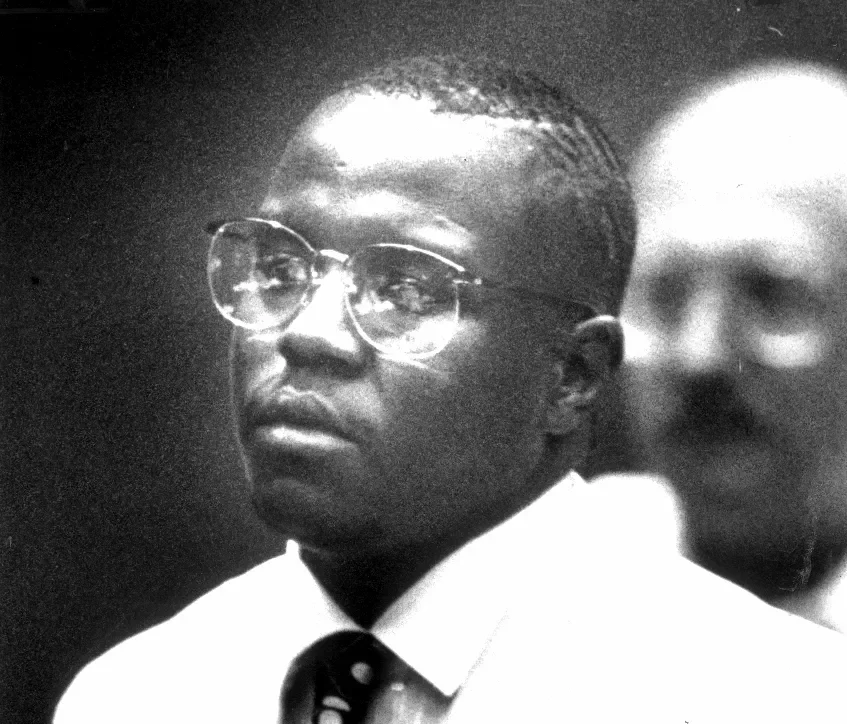
The Case of Samuel “Baby Sam” Edmonson
Samuel “Baby Sam” Edmonson was arrested in Brooklyn in 1990 and convicted of murder in a case later tied to the controversial work of Detective Louis Scarcella. For more than three decades, he sat in prison for a conviction that would eventually be unravelled by serious questions about the reliability of key testimony and other evidence.
In 2022, after years of legal advocacy and new review of the case, a judge vacated Baby Sam’s conviction, concluding that the conviction should never have stood. After 33 years in prison, he walked free and began rebuilding his life — reconnecting with family, pursuing opportunities, and adjusting to life outside.
For three years, Baby Sam lived as a free man. He worked, planned for his future, and looked forward to restoring his life after decades lost to incarceration.
But in 2025, without a new trial and without new evidence presented in open court, the New York appellate court reinstated the conviction. Legal counsel argued that this reversal was unjust and posed serious questions about fairness and due process.
This page is designed to provide a clear and factual overview of the legal history and controversies in Baby Sam’s case for reporters, advocates, legal professionals, and members of the public seeking verified information.
Timeline
Baby Sam was arrested and wrongfully convicted based on discredited police work. He spent the next 33 years fighting for his life behind bars.
1990
A judge finally vacated the conviction, citing a lack of reliable evidence. Samuel walked free, began a career, and spent three years as a model citizen.
2022
Listen to the anthem of his three years as a free man. Hear the joy he lived before it was unjustly taken away.
Samuel at a New York polling place (June 2023)
before his freedom was unjustly revoked.
After the court dismissed claims of investigative misconduct and witness statements, Sam’s conviction was reinstated. He returned to custody without a new trial.
2025
-
In June 1987, Kenneth Rankin was shot and killed by two unknown assailants.
Samuel “Baby Sam” Edmonson was later implicated.
At the time:
• The sole eyewitness could not describe Sam
• No physical evidence tied Sam to the shooting
• The shooters were unidentified
-
Within 72 hours of the Rankin shooting:
• Police had a suspect in custody
• A show-up identification was conducted
• The eyewitness stated the man shown looked like the driver involved
Critically:
• The suspect identified was not Sam
• This alternative suspect was never meaningfully investigated
• The jury was never informed of this identificationThis failure became the foundation of a misidentification that was later buried.
-
Approximately one year later, detectives Louis Garcello and William Morris generated a police report stating that the eyewitness had made a positive identification of Sam.
Key issues:
• The eyewitness had never previously identified Sam
• The identification occurred only after meetings with detectives
• The eyewitness’s description of the driver was not testified to until after those meetings
-
In January 1988, Sam was implicated in the murder of William May, a separate homicide later tried together with the Rankin case.
-
Witness Testimony
The prosecution relied almost entirely on testimony:
• Thomas Porter claimed he witnessed the May murder through a steel door
• Porter later recanted, stating under oath that:
• His grand jury testimony was fabricated
• His trial testimony was fabricated
• He was coerced by detectives
Another key prosecution witness admitted:
• He lied to the grand jury
• He falsely claimed he saw Sam shoot William May
• He later acknowledged he never witnessed the murder
-
• A witness testified Sam waited in a black Mercedes-Benz
• Police property-clerk records showed the vehicle was in police impound
• This contradiction was never addressed by either side at trial
-
The jury convicted Sam of:
• The Rankin murder
• The William May murder
• Most remaining counts
Sam was sentenced to decades in prison.
-
Under Brooklyn District Attorney Charles Hynes, a Conviction Integrity Unit existed but produced minimal relief, overturning only one known wrongful conviction during that era.
-
After Kenneth Thompson was elected:
• He ran on a platform of reform
• The CIU was restructured and renamed the Conviction Review Unit (CRU)
• Old cases were reopened for investigation
Sam later learned his case was among those reopened.
-
Beginning around 2011, Sam was periodically informed that his case was “under review.”
For years, he was told:
• Witnesses were being interviewed
• The investigation was ongoing
No substantive progress was disclosed.
-
In February 2015, Keith Christmas—the key prosecution witness in both homicide cases—and his attorney offered to provide relevant information to the CRU regarding detectives Louis Scarcella and William Morris.
The CRU refused to interview him.
This refusal occurred before any court hearing and before Sam filed his successful post-conviction motion.
-
During this period:
• Sam was repeatedly told witnesses were being interviewed
• Christmas had already come forward and was turned away
• The Brooklyn DA’s Office, under Eric Gonzalez, refused to grant immunity
• Christmas was threatened with reincarceration if he changed testimony
Sam later concluded the review process was being slow-walked.
-
At the evidentiary hearing:
Keith Christmas testified that:
His grand jury and trial testimony in two murder cases was fabricated
The information came directly from detectives
Detective Scarcella removed him from custody
He was taken to restaurants, social outings, and allowed conjugal visits
He was brought to crime scenes and told what to say
He was given police reports to memorize
Detective Louis Scarcella claimed that:
He had little recollection of the cases
His deceased partner handled most of the investigations
He admitted to abusing judicial take-out orders by bringing incarcerated witnesses into the community for meals and sexual encounters.
Thomas Porter testified that:
He met with the Brooklyn DA’s Office prior to the hearing
He was asked closed-ended, leading questions
Despite earlier sworn recantations, his prior statements had been coached
-
On June 14, 2022, after decades of litigation and advocacy:
• Sam’s convictions were vacated
• The court cited newly discovered evidence
• The ruling relied heavily on:
• Recantations of two key witnesses
• Evidence of detective misconduct
Sam was released from prison.
-
Following his release, Sam:
• Worked with at-risk youth
• Participated in school safety and anti-gun-violence efforts
• Volunteered with:
• TFK – Men for Kings and Queens
• Mel Kwan Janelle Anderson Foundation
• Mount Baptist Church food pantry
• Delivered food to elderly community members
He was not retried and committed no new crimes.
-
On April 9, 2025, the New York Appellate Division reinstated Sam’s convictions, ruling that:
• Detective Scarcella’s misconduct was not an issue at the original trial
• The Supreme Court did not credit Thomas Porter’s sworn statements
• Despite the trial court previously finding Porter unreliable, those findings were disregarded
Sam was returned to custody without a new trial.
-
Sam is currently incarcerated in an upstate New York prison while:
• Further appeals are pursued
• His legal team argues that:
• His exemplary conduct after release
• His community contributions
• And the extraordinary posture of this case warrant a stay of execution of judgment
-
Sam’s case has drawn widespread support from:
• Community advocates
• Faith leaders
• Wrongful-conviction supporters
Figures such as Brother Thomas and others who supported Sam after his release continue to advocate publicly against his reincarceration.
Supporters emphasize:
• The injustice of reinstating a vacated conviction
• The human cost of reversing freedom years later
• The urgent need for accountability
Samuel “Baby Sam” Edmonson’s case illustrates the complex failures of the criminal justice system—from misidentification and coerced testimony, to delayed review, acknowledged error, and reversal after release.
As Sam and his supporters continue to fight, his case stands as a warning of what happens when truth is delayed—and justice is undone.
Justice for Samuel Edmonson